Home | Tree of Life | Evolution | Evolutionary Genealogy | For Teachers | Contact Us | Store
front

Evolutionary Genealogy

simple family tree

Conventional genealogy describes the relationships and descent of members of a family or perhaps a small group of closely related families. This is usually depicted graphically by a family tree. These trees illustrate the relationships between brothers, sisters, cousins, grandparents and great-grandparents as points on a branching tree. Most family trees only go back a few generations, perhaps to a great, or great-great grandparent. But they stop only because of lack of information. They of course really keep going, to great-great-great grandparents, great-great-great-great grandparents, and so on. In fact, if you keep going back in time, your family tree will eventually join up with the family tree of every other person on the planet. You are related somehow and someway to every other human on the planet, living or dead, whether it be George W. Bush, Barack Obama, Genghis Khan or Queen Cleopatra. This is true whether you are a bible literalist or accept evolution.

simple family tree

Even without the birth records and family histories that are needed to make up a family tree, modern genetic studies more and more are able to suggest in a broad way how any two human beings are related. Pick any person on the street. Travel far enough back in time and you will meet the common ancestor the two of you share, which makes that person your cousin. Genetic studies can suggest, roughly, when the common ancestor you share may have lived, or to put it another way, approximately how many generations back in time do you need to count up to reach a common ancestor. If the common ancestor is just two generations back (in other words, a shared grandparent), that person is your first cousin. If the common ancestor is three generations back (in other words, a shared great grandparent) that person is your second cousin. That person's child would be your second cousin, once removed, and their grandchild your second cousin twice removed. If the common ancestor happens to be 500 generations back (in other words, a shared 498-greats-grandparent) that person is your 499th cousin.

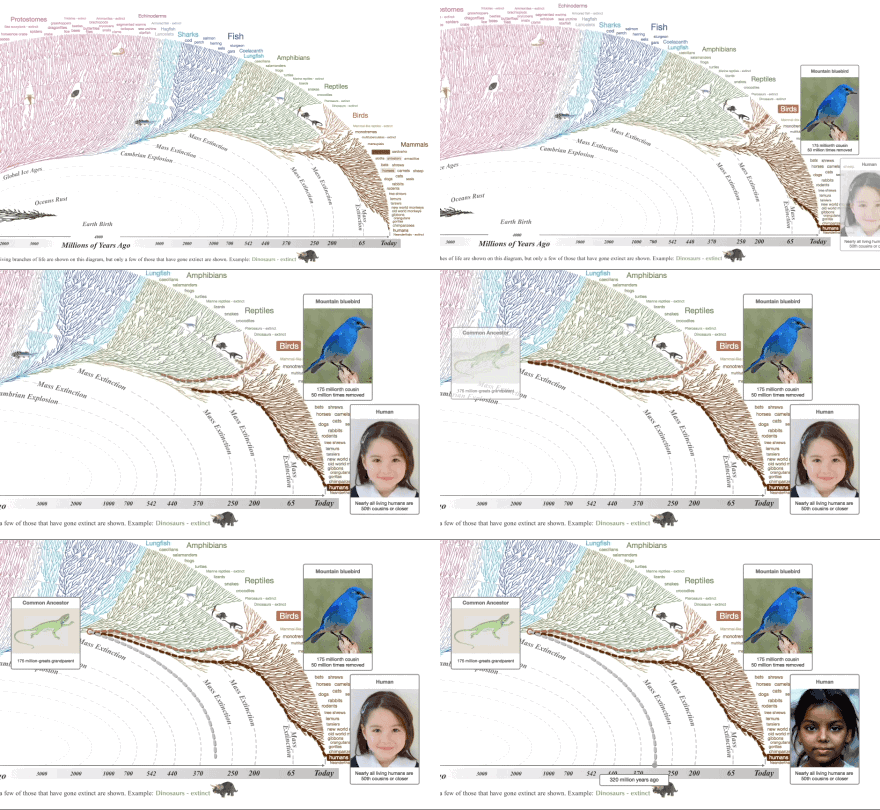
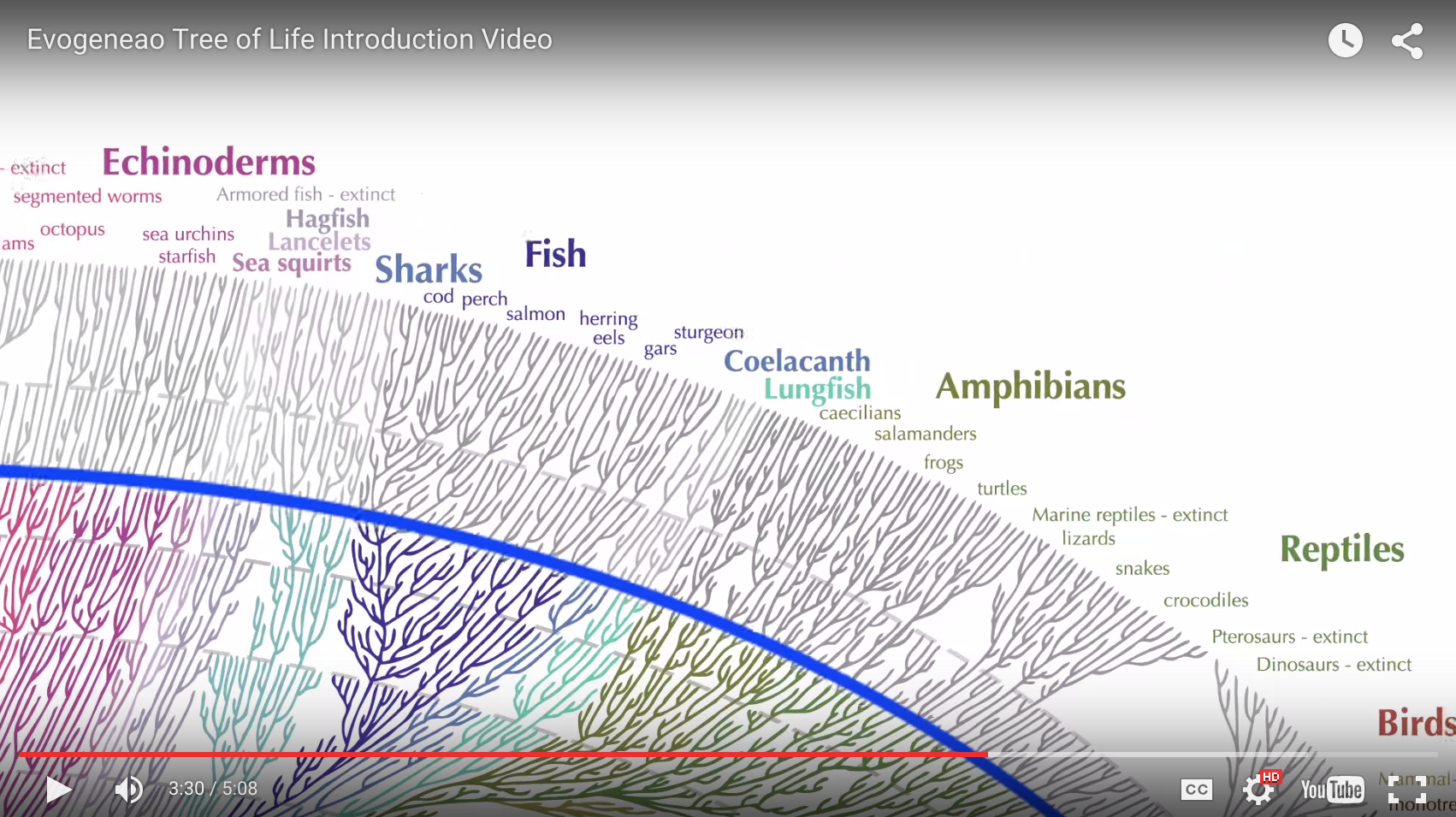
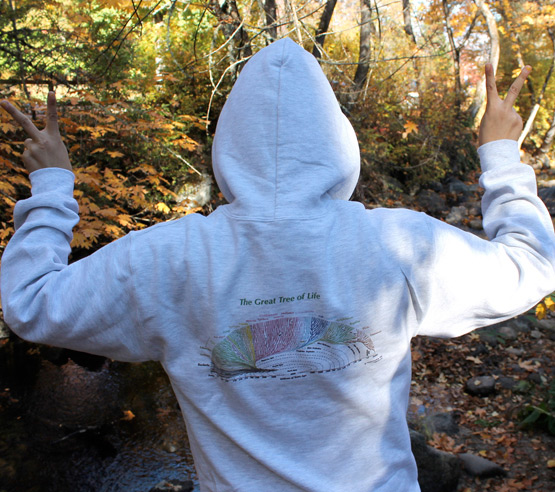
The Great Tree of Life on this website does the same thing as a standard family tree; the only difference is that it goes back thousands and millions of generations, all the way back. It describes the relationships and descent of members of Life's family, of living things past and present.

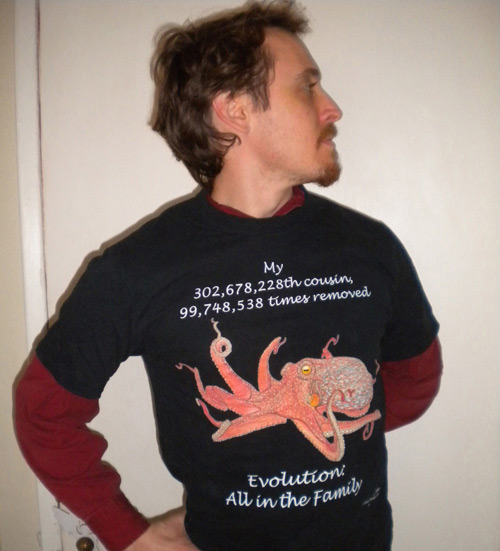
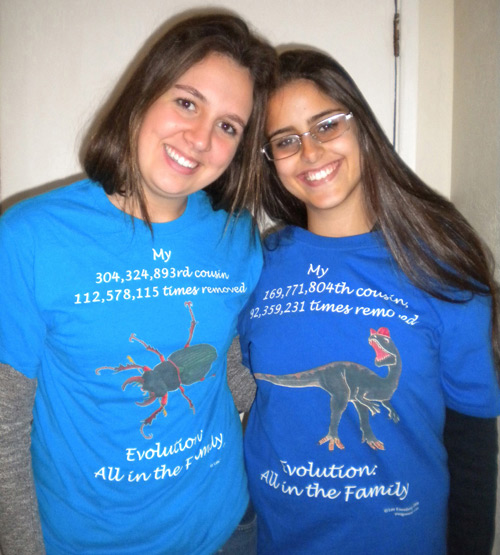
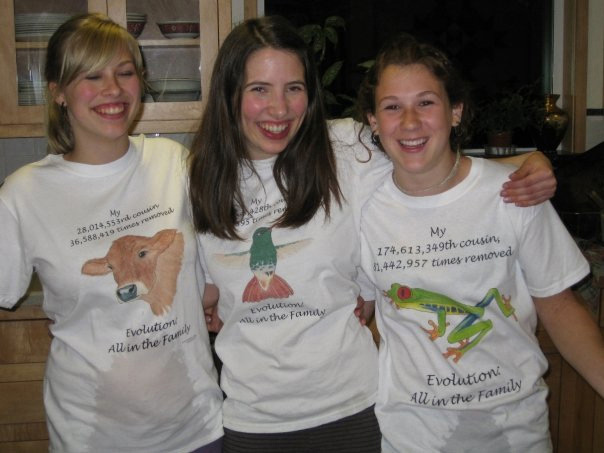
Just as in a standard family tree, the genealogical relationship between members of Life's family can be described, albeit pretty roughly. To one degree or another, every living thing, whether it’s a bird, a tree, or a dinosaur, is your cousin. And more specifically, that organism is your xth cousin, nth times removed.

bacteria It should be noted that for organisms that reproduce asexually, like bacteria, a family tree description based on numbers of generations, and parents and grandparents, breaks down. Bacteria and other such things are related to us, but we can't describe that relationship in the same way we would for a sexually-reproducing organism, like a dog or dinosaur.


Calculating your genealogy with other life forms

To make a rough estimate of the cousin and removal relationship between you and any other living thing, all one needs to do is count up the generations back to the common ancestor. This sounds easy in theory but is complicated in practice. First, make an estimate of the number of generations along the human line back to the common ancestor. Using information freely available in textbooks and on the Internet, note commonly accepted estimates for the likely generation times of modern and ancient humans, as well as those creatures most likely to be templates for our successively older ancestors; chimpanzees, other apes, various species of monkey, tree shrews, and so on. Then apply the appropriate generation times to time intervals defined by ages of meeting points with common ancestors. For example, between 25 and 40 million years ago, that is, between the approximate ages of our common ancestors with old world and new world monkeys, respectively, the ancestor on the human line would be assumed to be a creature somewhat similar to a new world monkey and thus have an average of ten years per generation. In the absence of direct information on generation times for a species, it can be estimated by noting average life expectancy in the wild, years to first birth, and average age at last birth. With this sort of information, I usually picked a time midway between years to first and last birth and rounded it to the smaller figure to get generation time.

Second, calculate the number of generations along the non-human branch back in time to a common ancestor with humans. You will need to gather data on evolutionary history, generation times of the modern creature, and, where available, the generation times of types of modern creatures likely to serve as templates for intermediate forms along the evolutionary path NCSE figure to the common ancestor with humans. In the absence of good data, generation times for intermediate forms can be estimated just from likely body size; smaller forms generally having shorter generation times. If no data are found on forms intermediate between the current species and the common ancestor, you can evenly spread out the change in generation times between the current species and common ancestor along the time between them. A convenient control point is the common ancestor with the human line, whose generation time would apply for some time up from the age of the common ancestor along both the human and non-human line.

For my own effort on making these estimates I first chose a suite of modern day, familiar species. I started of course with chimpanzees, gorillas, and orangutans, other apes and monkeys, and then continued through tree shrews, rodents, rabbits, dogs and other carnivores, to horses, pigs, and other domestic animals, then to whales, bats and shrews, then to reptiles, amphibians, and fish, and finally called it quits at dragonflies. A sample of the graphic technique I used to post these data and make the cousin and removal calculations are shown here. Click to view enlarged chart. A separate spreadsheet contains all my data and sources, which I would be happy to share with interested readers upon request.

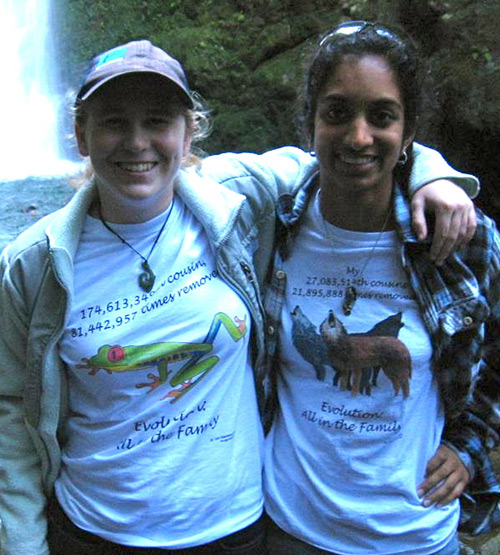
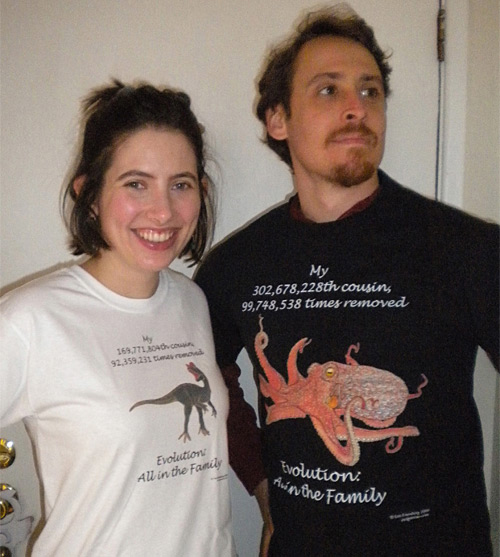
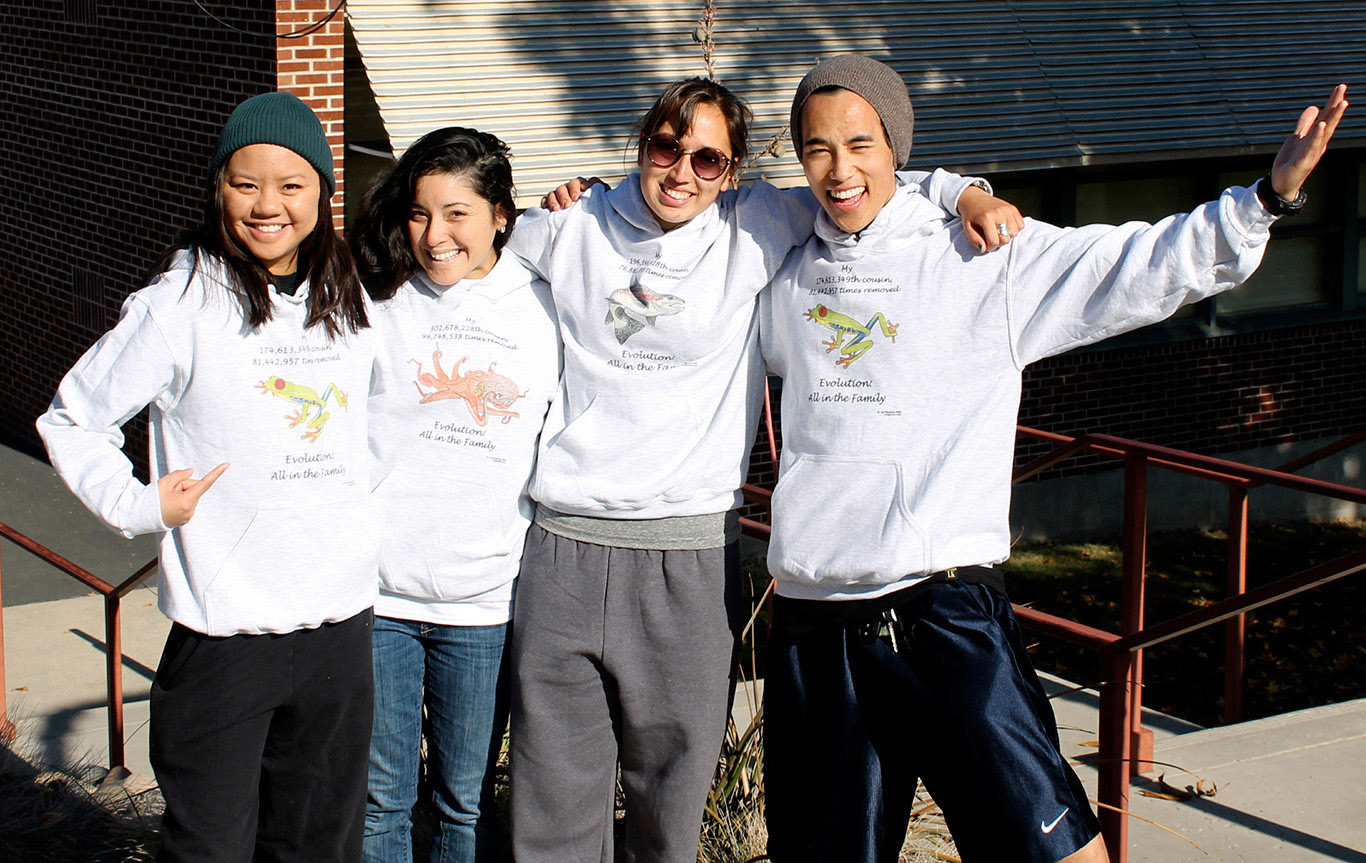
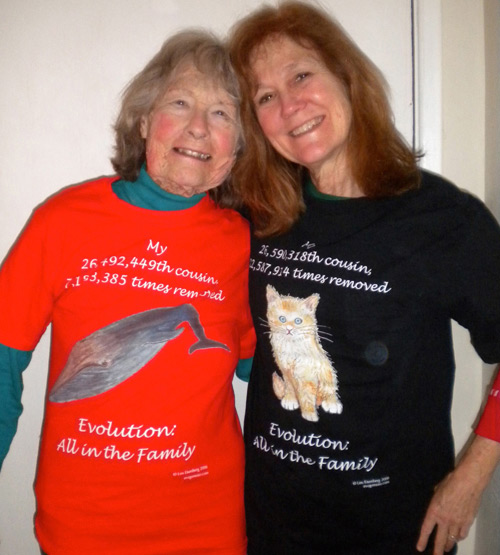
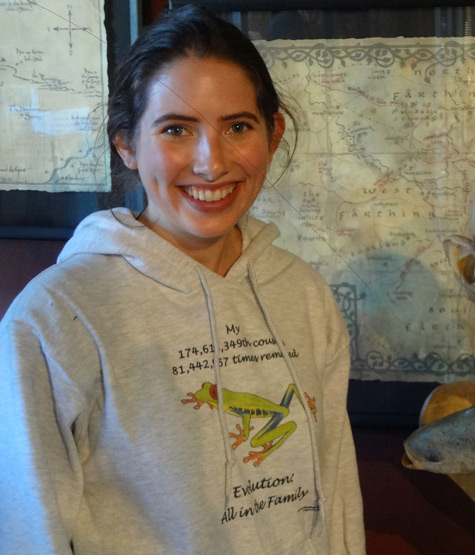
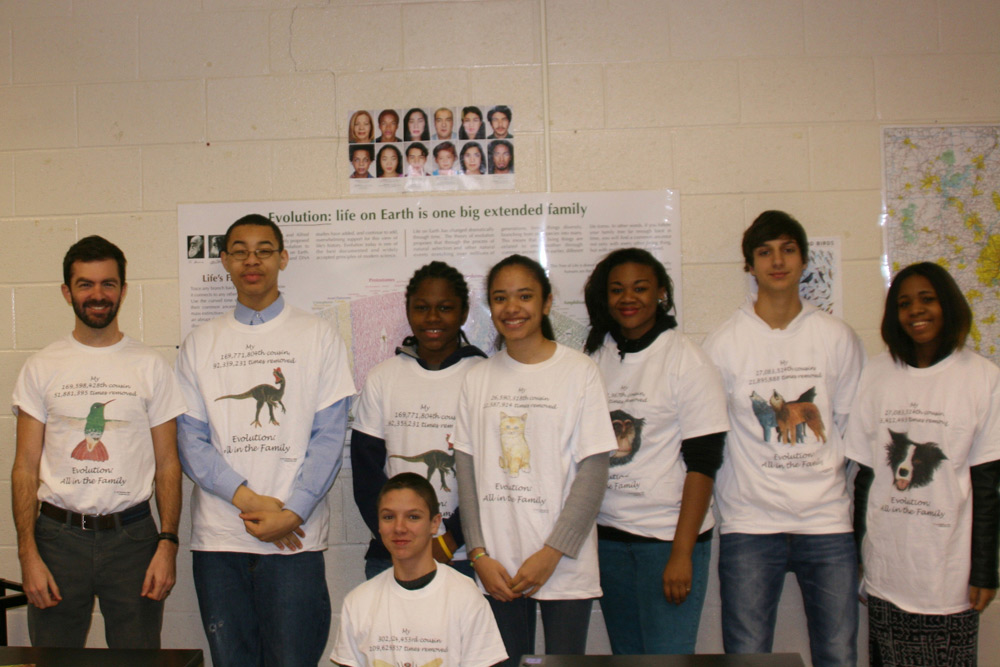
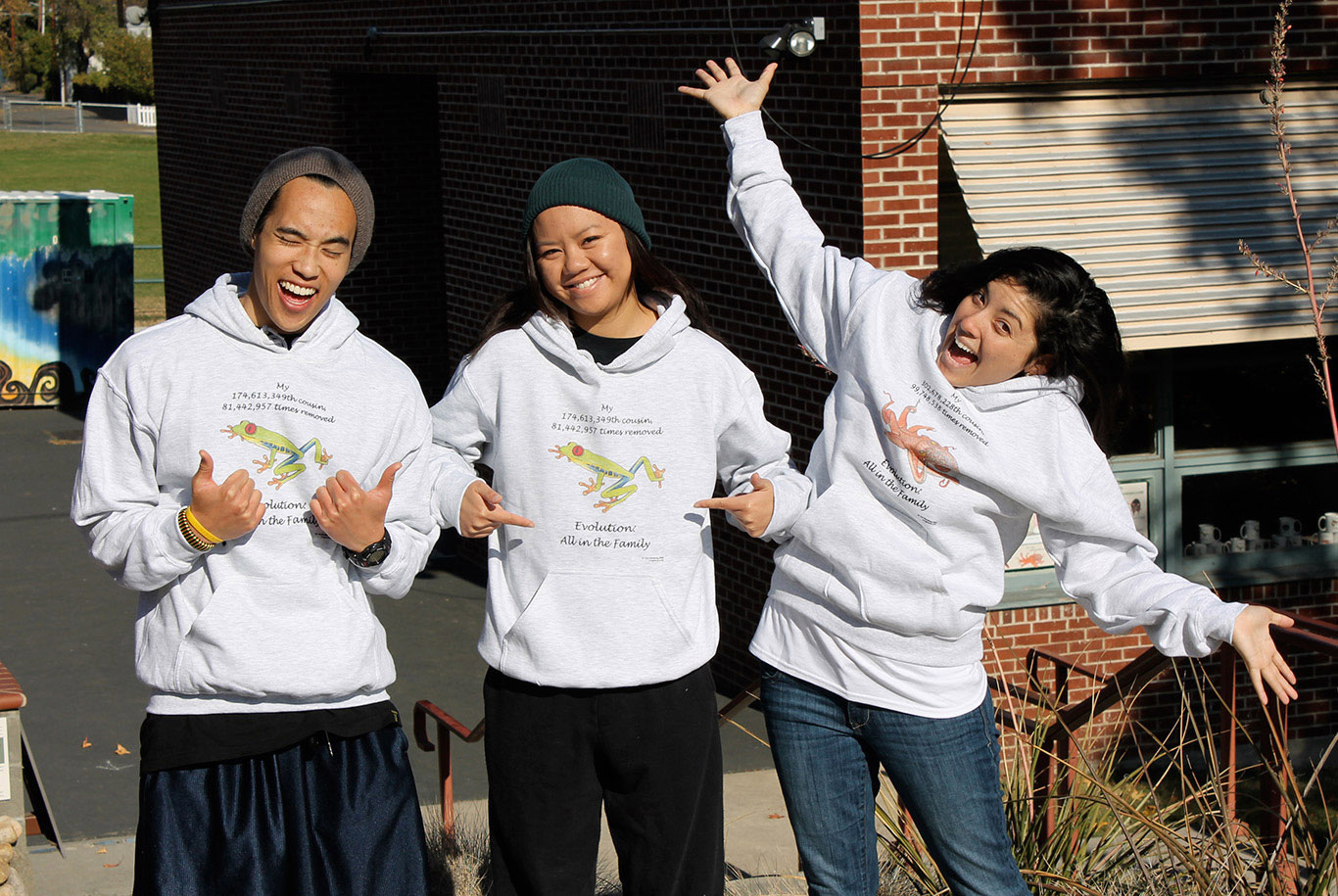
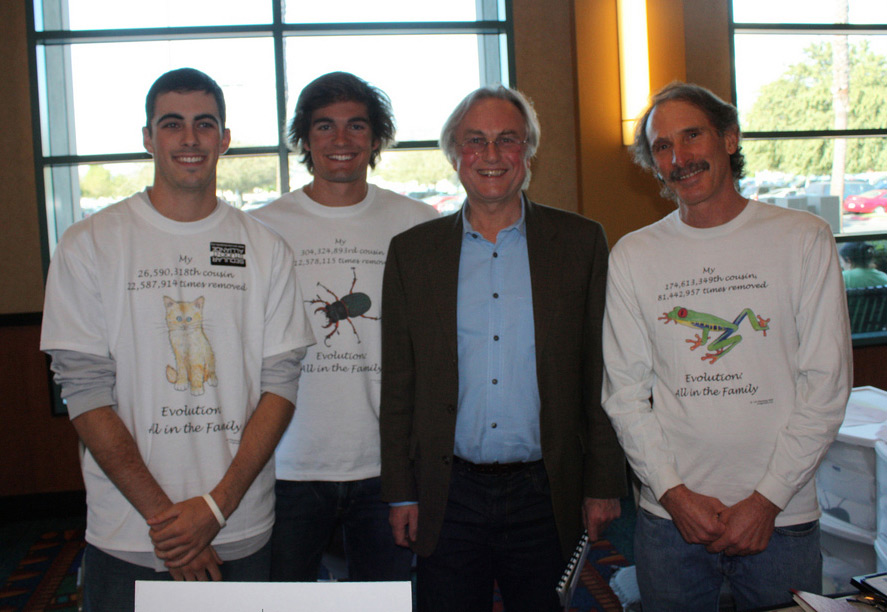
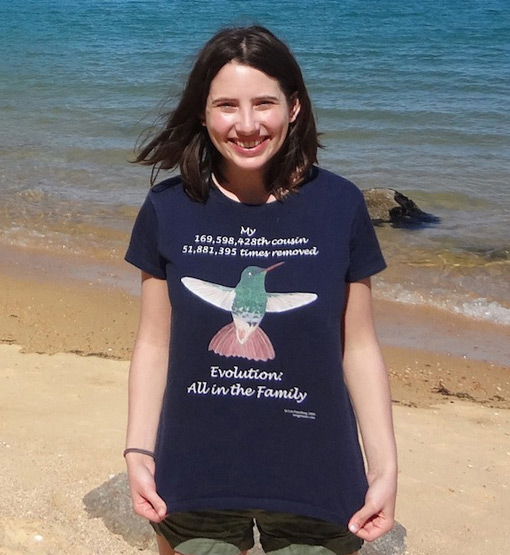
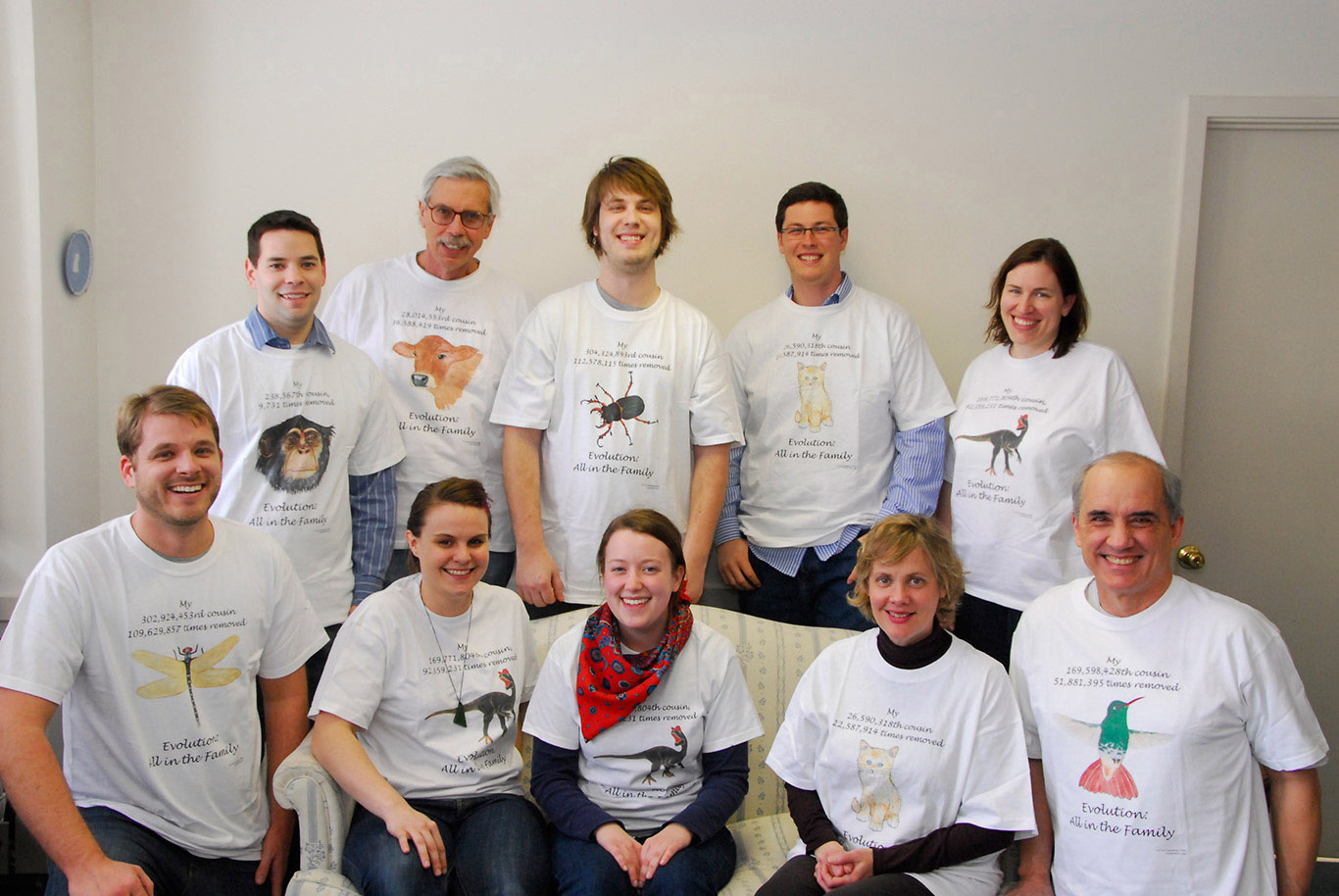
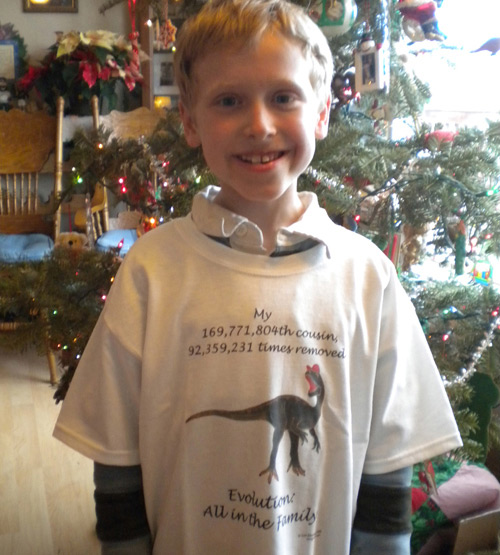
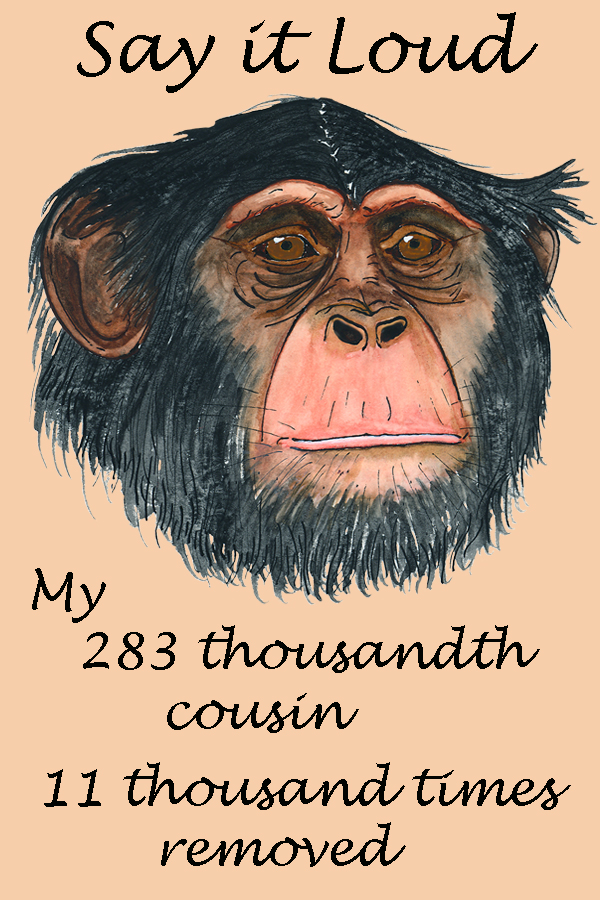
The reader will certainly see that there is unavoidably a potentially huge error in any single one of the estimates used to come up with a cousin and removal relationship. In many cases the age of the common ancestor, the ages to intermediate ancestors, their likely forms, and their generation times are poorly known. A big error in any one estimate could push the outcome off base quite a bit. However, it is at least reasonably likely that errors cancel each other out and that the overall result yields a reasonable estimate. The goal of this exercise is not to determine an exact relationship, only to get reasonably close to illustrate the point. In other words, we can be pretty certain our common ancestor with chimpanzees is between our 150,000-greats-grandparent and our 400,000-greats-grandparent, with the most likely number of ‘greats’ being perhaps between 200,000 and 300,000. NCSE table But the real point is that that individual chimpanzee at the zoo looking you in the eye has an exact genealogical relationship with you, such that the chimp could be something like your two hundred and thirty-four thousand three hundred and fifty sixth cousin, nine thousand seven hundred and twenty times removed. The table shown here presents a summary of my cousin and removal estimates for a few of my relatives. Click to view enlarged chart.

Of course it must also be recognized that (except for close relations) there is probably NOT a unique genealogical path between two organisms. It is much more likely to be a lengthy web of interrelationships. For example, my wife and I might be, exactly, fifteenth cousins twice removed, as well as thirteenth cousins thrice removed, depending on which tortuous path of ancestors one followed back to the common one. But as long as this is understood, the exercise of counting generations back to a common ancestor is really an eye-opener for all who make the journey.

frog Ashland, Oregon | Copyright 2008-2011. Leonard Eisenberg. | All rights reserved.